Hooter’s Motel
Point BlankHooter’s Motel is a Maryland lodging that becomes the site of a carefully staged trap against the Federal Bureau of Investigation and local police. Its role turns on the gap between what the officers believe the motel contains and what the place has actually been made to signify: a stolen van and room 212 suggest that the kidnappers are present, but the apparent trail is a lure. The resulting explosion destroys the building and exposes the motel as part of an attempt to kill Savich and other officers.
Setting and Physical Layout
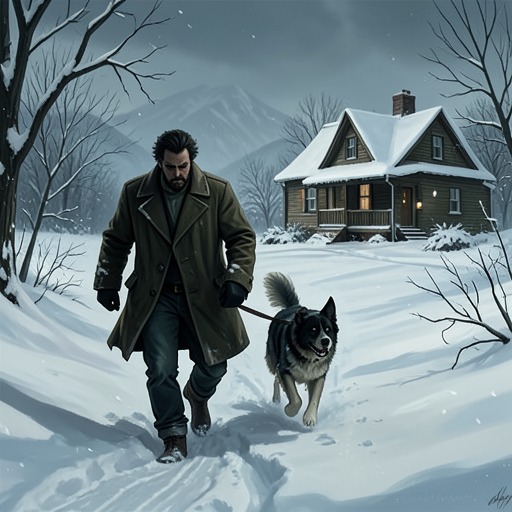
The motel is identified as being in Pumis City, Maryland, and the operation there unfolds on a brutally cold winter night before Saturday morning. Room 212, the final room on the second level, becomes the center of the police surveillance. Agents watch its thick blinds and the old Chevy van in the parking lot, whose dirt is so heavy that they cannot read its license plate. The apparent stillness of the room offers little reassurance: the officers expect danger but have no clear view of what is happening inside.
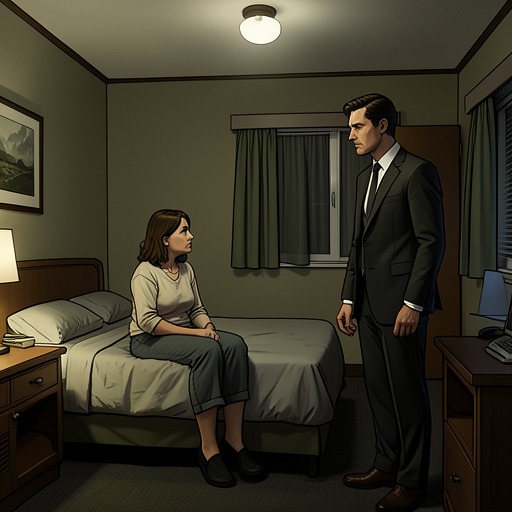
The layout shapes the approach. A flight of old green stairs leads to the upper level, and the agents advance along the exterior toward the room’s single draped front window. Inside, the room is described as a fourteen-foot square with a double bed, a small nightstand, an old television on a dresser, and a second window at the back. That rear window faces a narrow parking area bordering woods, where Lacey Sherlock, other Federal Bureau of Investigation agents, Chief Tumi, and his deputies are concealed. A small bathroom has a high window too small to provide an ordinary exit. These details make the room legible as a tactical space while leaving the most important question unresolved: how the people the team expects to find there have already disappeared.
The Stakeout and False Trail
The motel enters the investigation through evidence connecting it to Pinky Womack’s kidnapping. Moses Grace and Claudia are the names written on the kidnap note and entered in the motel registry. Rolly, an informant, reports that he overheard an elderly man and a young woman discussing Pinky’s removal from his apartment and their plan to take him to the motel. He also recalls talk of moving Pinky out before dawn on Saturday, although the pair did not say where they would take him next. The report gives the authorities a destination, but not a reliable explanation of what awaits them there.
With few other leads, the Federal Bureau of Investigation and local police organize a large operation. Officers wait through the cold for Moses Grace and Claudia to leave room 212 with Pinky. Savich recognizes the possibility that the setup is a trap, yet the team has little alternative to acting on the information it has. Sharpshooters are ready, and agents watch the room. The old Chevy van in the lot strengthens the impression that the suspects are nearby, even though the vehicle’s presence proves nothing about who is inside.
The motel’s apparent evidentiary value is clarified later. At a conference after the attack, Savich explains that Moses Grace and Claudia had left the stolen van there a week earlier as a decoy, intending to make investigators believe they were occupying the motel room. The van and room were therefore not simply clues to the kidnappers’ whereabouts; together, they manufactured a false location for the officers to converge on. The stakeout’s central assumption—that the suspects were waiting behind the blinds—was the mechanism by which the motel became dangerous.
Entry, Discovery, and Destruction
When another gunshot and a groan are heard, Savich and Dane Carver move toward room 212. They approach under cover of their scarves, aware that either kidnapper might see them. Savich directs the other officers to turn on floodlights and use a bullhorn once the door is forced, while he and Carver enter. The room is empty. The absence of both suspects and Pinky turns the expected hostage rescue into a search for the route by which the occupants escaped.
That search is abruptly redirected by a small red light on the nightstand. Savich recognizes that a bomb has been left in the room and warns the others to get down. He and Carver leap from the second-floor level as the explosion shakes the building. They land in the parking lot, run clear, and take shelter in an ice-coated ditch. Sherlock is among the officers Savich checks on by radio. The motel catches fire; debris falls around the escaping agents, and the structure is left smoldering as firefighters extinguish the remaining flames.
About twenty minutes later, Savich stands before the wreckage while the fire hoses douse the last of the fire. Raymond Dykes, the motel’s owner, arrives looking shaken. His reaction prompts Savich to understand that Moses Grace has double-crossed him: the motel’s destruction was part of the setup, not an accident or an ordinary loss of control. Dykes’s distress and his remark that he will be in serious trouble when Marlene finds out support the immediate sense that the attack has consequences beyond the officers caught in the trap, though the evidence here does not establish the full extent of his involvement.
Aftermath and Narrative Significance
The later account makes the intended target of the motel operation explicit. Savich says the decoy was designed to make officers believe Moses Grace and Claudia were in the room, while Sherlock identifies Savich as Moses’s primary target and notes that she too was threatened soon afterward at Arlington National Cemetery. The motel attack thus belongs to a wider sequence of attempts against the investigators, but its particular method depends on convincing them to enter a place the perpetrators had already prepared to destroy.
The episode also gives the motel a double function in the investigation. Before the explosion, room 212 seems to concentrate the available clues: the signed names, the stolen van, and Rolly’s account all point toward it. Afterward, those same clues are reinterpreted as parts of a deliberate deception. Later behavioral analysis describes Moses Grace as believing that nobody can touch him and suggests that he may be gravely ill or dying. That interpretation helps frame the audacity of leaving a conspicuous vehicle and arranging an attack around the motel, but it remains an assessment of Moses rather than a confirmed explanation of every choice made there.
Hooter’s Motel is consequently more than the backdrop to a failed arrest. Its ordinary features—an upper-level room, a visible vehicle, a narrow rear parking area, and a concealed approach through the woods—become components in a contest over information and expectation. The officers arrive believing that the motel will bring them within reach of Pinky and the kidnappers; instead, the empty room reveals how completely the location has been made to speak falsely. Its destruction marks the cost of trusting that apparent trail and establishes the motel as one of the earliest clear demonstrations that Moses Grace is using the investigation itself to draw Savich into danger.